YAS BAY
ABU DHABI




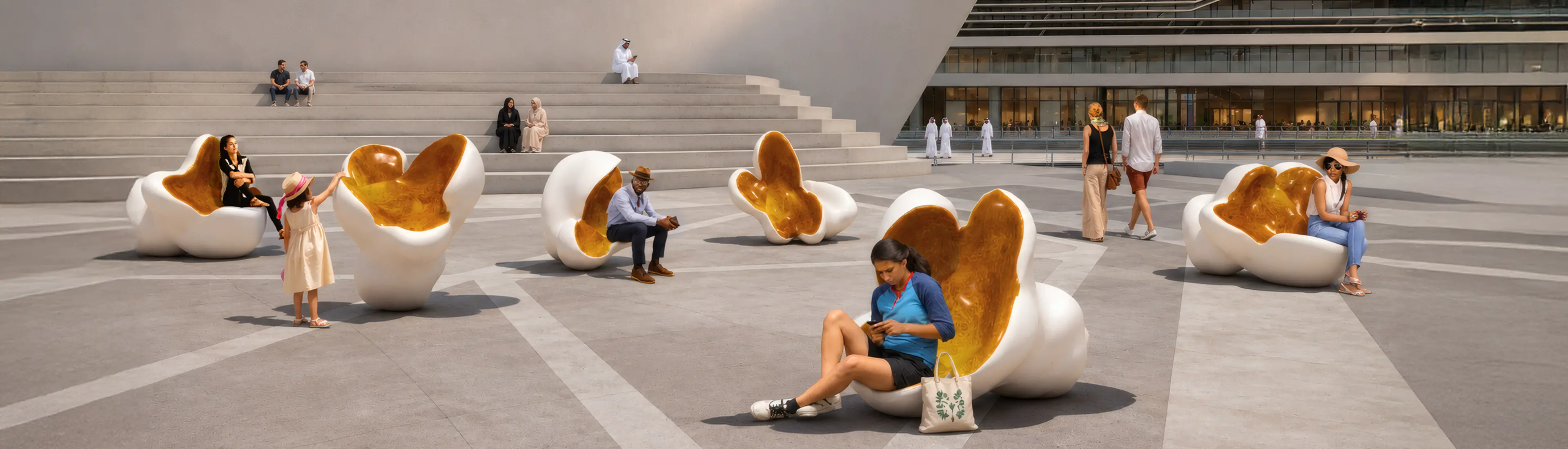
Community Mapping reveals who a place serves, how different groups relate to it and where identity, belonging and participation can be strengthened. LIMAH looks beyond simple audience categories to understand the human networks that give a place social meaning.
Major developments often affect many communities: residents, workers, visitors, businesses, cultural groups, institutions and people with long-standing ties to the area. Treating them as one audience can produce places that feel detached from everyday life.
We map the people, relationships, behaviours, rituals, needs and areas of shared or competing interest around the project. This helps reveal where connection already exists and where the built environment can support stronger inclusion and recognition.
LIMAH uses community insight to inform narratives, public art opportunities, gathering spaces, cultural interpretation and engagement priorities. We identify who should be represented, where participation matters and how public experiences can reflect the community without becoming fragmented.
The output gives clients and design teams a clearer basis for decisions that may otherwise be driven by assumption.
Community Mapping connects social context with the wider Place Identity & Public Art strategy. It helps create places that people can recognize themselves within, contribute to and feel a stronger sense of ownership toward.