


Here, the comparison concerns the depth of the design service. A signage consultancy may focus primarily on sign locations, graphic treatments and documentation. An experiential approach investigates the journey and considers the wider environmental, informational and operational decisions that shape it.
For clients, the title is only a starting point. Examine what the team means by it, what its work demonstrates and what the proposed fee actually buys.

The title does not establish the expertise
A client can appoint a team described as a wayfinding consultancy and receive a service centred almost entirely on signage design.
Signage consultancy involves expertise in physical communication: information layouts, typography, graphic identity, sign families, materials and placement. That is valuable work. It can also represent a substantially narrower appointment than the client believes it is purchasing.
A stage called “wayfinding strategy” might examine user behaviour, arrival sequences, destination hierarchy and operational conditions. It might amount to little more than plotting signs onto architectural plans. Both submissions can carry the same heading.
The title alone tells you little about the designers’ training, relevant experience or depth of investigation. Ask about those things directly. Then ask to see how they appear in the work.
A useful test is whether the team can explain why someone might become uncertain before proposing what information to add. Can it distinguish between a missing direction and an entrance that is difficult to recognise? Can it identify a destination hierarchy that makes sense organisationally but is confusing to a first-time visitor?
The answers reveal whether the service investigates the navigation experience or principally designs its physical communication layer.
LIMAH treats wayfinding as experiential design
At LIMAH, Wayfinding & Navigation sits within Built Environment Experience Design. It considers how people recognise a place, understand their surroundings, make decisions, move and arrive. Signage is one layer within that experience.
This perspective opens a wider range of design opportunities.
Public art can establish a recognisable landmark. Sensory design can contribute to the character of a destination or transition. Environmental graphics can communicate identity and information. Digital technologies can provide guidance where information changes or an additional interaction is useful. Spatial visibility, naming and staff communication also influence how people understand the journey.
The task is to establish which interventions serve the place and its users. A broader approach does not require every project to include every possible layer. It requires the team to investigate the available responses and explain its choices.
Consider a visitor arriving from a car park into a large mixed-use destination. Their difficulty may begin before they encounter a sign: an unclear arrival point, unfamiliar destination names or several competing routes. The response could involve naming, environmental cues, a recognisable landmark, digital information and physical signs working together.
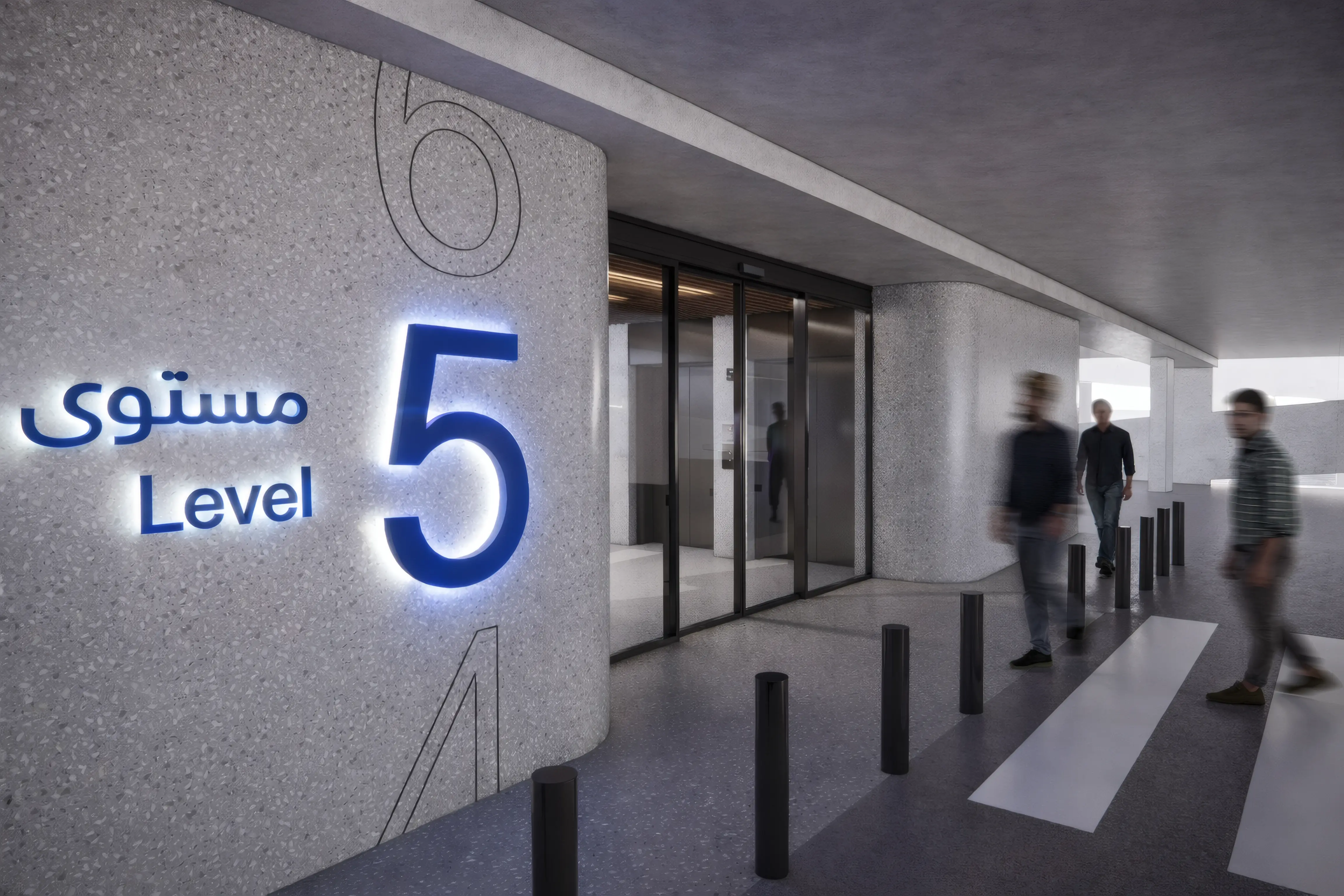
A process organised mainly around sign locations explores a more limited set of answers. The client needs to know which approach the project requires and which one the consultant is equipped to deliver.
Ask for the concept package and follow the reasoning
A portfolio shows selected outcomes. A complete concept package can reveal how the consultant reached them.
Request a suitably redacted example from a project with comparable complexity. Ask the lead designer to explain the brief, the investigation and the decisions that followed.
If the package identifies user groups, how do their needs change the design? If it includes journey maps, what did those maps reveal? If a decision point has been highlighted, what makes it difficult, and how does the proposed response address that difficulty?
The presence of diagrams is insufficient. Their analysis needs to influence the recommendations.
Ask the team to identify a finding that materially changed its response. Perhaps it challenged an arrival sequence, revised destination naming or recommended a different relationship between reception and circulation. The explanation should connect a condition with a decision and show how the recommendation was coordinated.
Document volume is a poor substitute for this connection. A long presentation can contain extensive mood boards and circulation diagrams while leaving the important experience questions unresolved.
Interview the people who will lead your project
Meet the designers responsible for the thinking, including the proposed project lead. Establish their relevant training and experience, their role in the sample work and how much involvement they will have in your appointment.
Give them a realistic condition from your project: competing entrances, a difficult connection from parking, different resident and visitor journeys, or destinations spread across several buildings.
Listen to how they investigate it. Do they ask who is arriving, what those people already know and what they need to recognise? Do they consider visibility, naming, operations and the sequence of decisions? Can they explain where public art, sensory cues or digital information might contribute, and where those interventions would be unnecessary?

Terminology offers clues, but it needs to be supported by a method. Ask the designer to demonstrate what “experiential” or “human-centred” means in a specific decision.
A response focused immediately on sign types and graphic treatments suggests a different starting point from one that first examines how people experience the environment. That difference should be understood before the appointment is made.
Examine the work beyond concept
A strong concept establishes direction. Design development and technical documentation reveal how thoroughly that direction is resolved.
Ask to see a connected sequence from a comparable project: strategy, concept, developed design, technical documentation and relevant delivery-stage reviews. Follow an important decision through the submissions.
Does the information hierarchy remain consistent in the layouts and final artwork? If illumination is central to the design, how is its intended appearance defined? If an element integrates with an architectural finish, who resolves that interface? Where a digital touchpoint is proposed, how are its content and physical location coordinated with the wider journey?
Each phase should answer more of the questions required for delivery. The package should make clear what has been resolved, what remains to be developed and who is responsible for doing so.
The work loses value when its defining qualities remain open to interpretation after the concept has been approved.
Technical depth determines what is left unresolved
A technical drawing can look convincing while leaving consequential decisions unanswered.
Materials may be described broadly. Fixing principles may be unclear. Illumination requirements may be insufficiently defined. Dimensions, artwork and architectural interfaces may disagree across the package.
Those gaps create room for variation during tendering, fabrication and installation. Different bidders may price different assumptions. Details that affect appearance, durability or integration may be decided without reference to a sufficiently clear design requirement.
Review what the consultant’s documentation defines. Depending on the appointment and procurement route, relevant information may include dimensions, materials, finishes, graphic layouts, typography, illumination intent, construction principles, mounting conditions and interfaces with adjacent work.
Specialist responsibilities must also be explicit. Fabricators and engineers may develop shop drawings, production methods and engineered details. The consultant should establish a clear design basis and an agreed process for resolving that remaining work.
The issue is whether the design is documented deeply enough for others to develop and deliver it without having to guess what was intended.
Ask the team which decisions are fully defined before tender, which remain for specialist development and how proposed alternatives are assessed. A sample technical package should support the answers.
Check how the design is protected during delivery
Documentation needs a review process behind it.
A material substitution may change appearance. A revised mounting detail may alter the relationship with the architecture. A different lighting arrangement may affect legibility. Moving a sign may change whether it is visible when someone needs it.
The appointment should establish who reviews these changes, what they are assessed against and how decisions are recorded and approved.
Depending on scope, the work may include tender clarification, shop drawing reviews, material samples, prototypes, site inspections and completion reviews. Each activity needs a defined purpose and allowance.
Ask to see redacted examples of review comments and their resolution. They can reveal whether the consultant checks broad visual consistency or follows the relevant details through to closure. A useful example explains what was questioned, why it mattered and how the issue was resolved.
This is another measure of the consultancy’s depth. The experiential ambition should remain recognisable in the installed result.
A low fee should prompt a question about scope
A low fee is a reason to investigate what has been allowed for. It does not, on its own, prove that the work will be inadequate.
One proposal may include user research, journey analysis, exploration across several experience layers, detailed coordination, technical development and reviews through delivery. Another may provide a drawing review, sign location plans, graphic concepts and a basic technical package.
Both may use similar stage headings. They are purchasing different services.
Ask who undertakes the analysis, how much involvement the lead designer will have and which journeys will be studied. Establish the coordination, technical resolution and delivery reviews included. Check what happens when findings suggest a change beyond the signs.
Read the exclusions alongside the promises. If a proposal describes a comprehensive experiential approach, does it allow for the investigation and coordination needed to provide one? If technical development is limited, which decisions pass to others, and has that work been allowed for elsewhere?
A higher fee needs the same scrutiny. The team should explain the resources, deliverables and accountability it supports.
Compare equivalent scopes before comparing the totals.
Choose the service your project requires
A focused signage design appointment can suit a clearly defined task where the wider navigation logic has been established. That is a legitimate scope with a clear purpose.
A large or complex environment may require a deeper investigation into how people experience and understand the place. Complexity can come from different user groups, interconnected destinations, unfamiliar arrival sequences, operational changes or the consequences of a wrong decision.
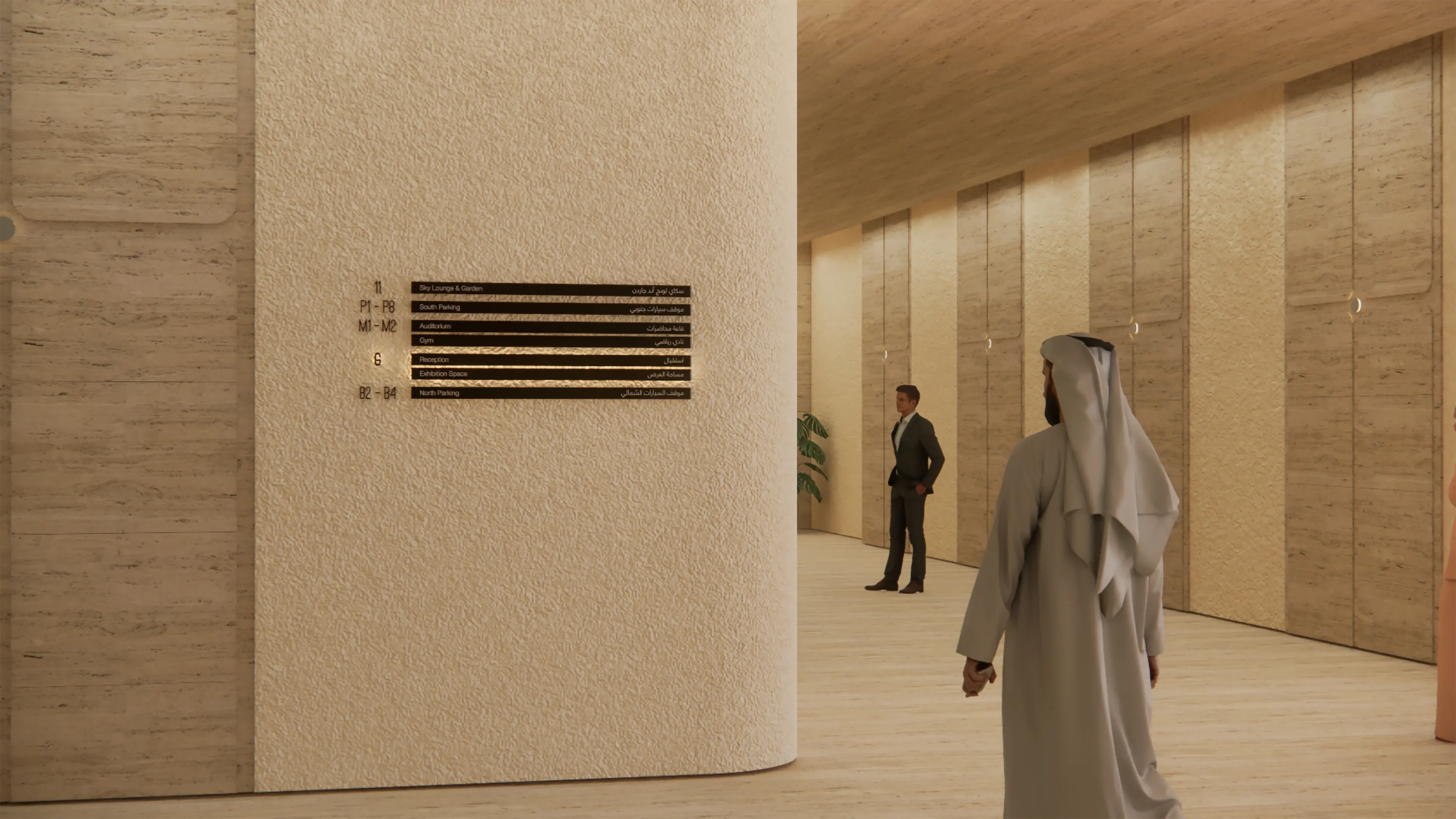
In those conditions, look for a consultant that can demonstrate both breadth of experiential thinking and depth of resolution through delivery.
Ask for the work across every phase. Meet the people responsible for it. Establish which questions the fee resolves and which it leaves to someone else.
That is how you find out what “wayfinding consultant” means in the appointment you are about to make.